When a Ruined Dream Invites Us to Stay
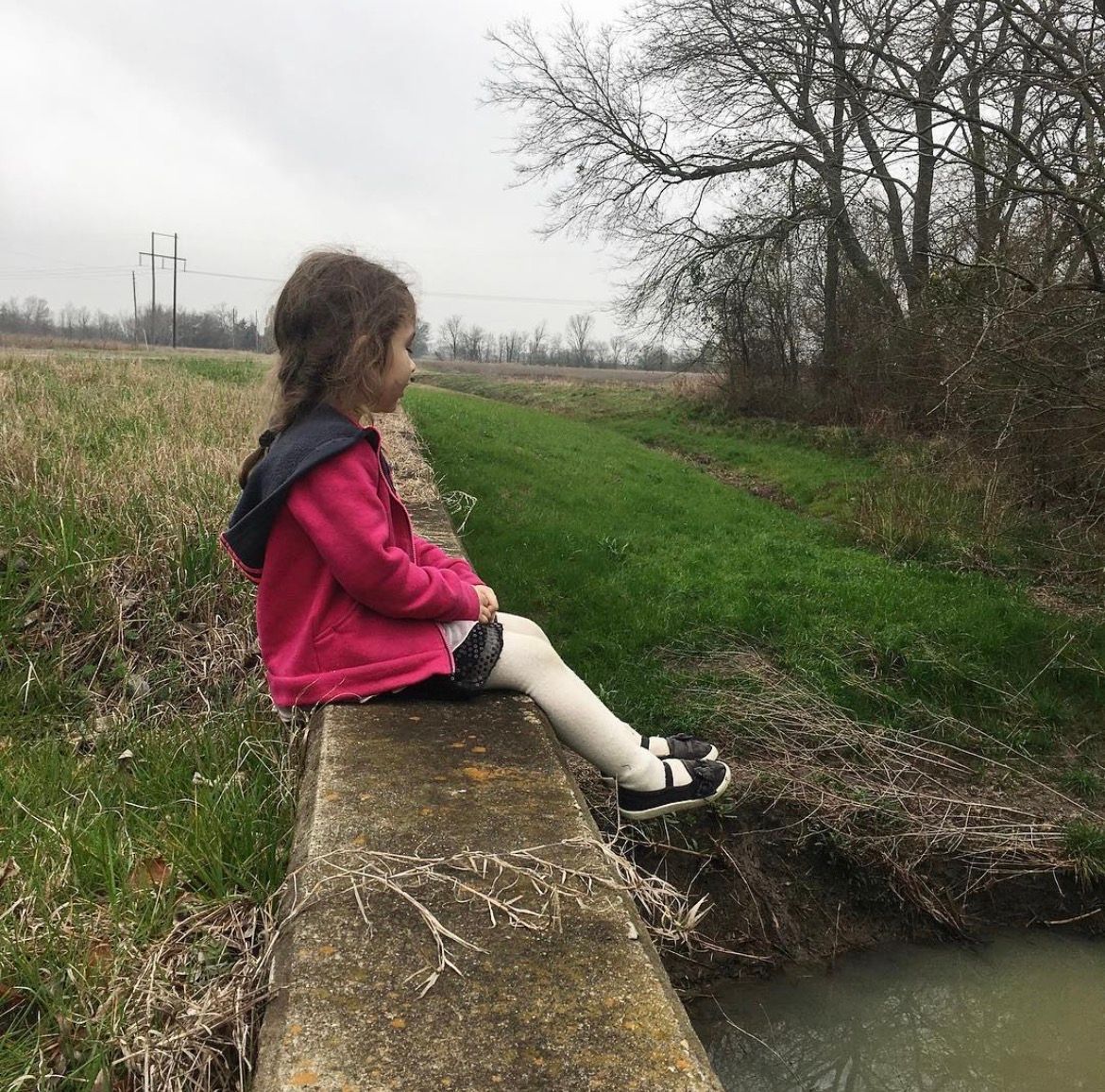
When my daughter Liesel was very small, she wanted to make a robot-like doll.
While our girl always kept a creative project going, it felt special to watch her give this robot more care than any project she’d made before. This guy would be her buddy.
A cardboard box in the yard became her work station. She gathered air-dry clay, paint, plastic caps, broken toys, and odd pieces of metal. For a four-year-old, she put an immense level of thought into how she wanted to craft him.
She painted the pieces, carefully pressing each one into the clay blob of his head. Then, with heartfelt care, she formed his face.
Ready for the clay to dry, she showed us her work with utmost delight—the plastic cap eyes painted black and white, the antennae aligned just right. Her new friend was coming to life, and his face lit up her smile. She inserted the piece she would use to form his body and made sure he was comfortable while he dried.
But close by hovered the curious toddler hands of Baby Brother. Tragedy struck when he yanked a piece away before the clay fully hardened, damaging her beloved new friend.
Tears streaking her face, Liesel’s features twisted in horror. In the awful realization, her voice trembled, hollow and broken. “Mommy. He is…ruined.”
This was nothing like when her towers got knocked down. This was the depths of her heart laid out with love and smashed.
I offered all the hugs and comfort I knew how to give, but to her, this devastation seemed more than she could bear. I looked at her robot and thought of pain I’ve known that could never be undone. I told her I was so sorry.
And I asked her to not give up on Mr. Robot.
With the same hollow quiver in her voice, she told me what she couldn’t ignore.
He would never be the same.
I agreed and my heart broke too. I longed to see more of the joy her new friend brought her.
“You made him, and I know you can re-shape him.” With a half-whisper, half-prayer, I hoped she would keep on.
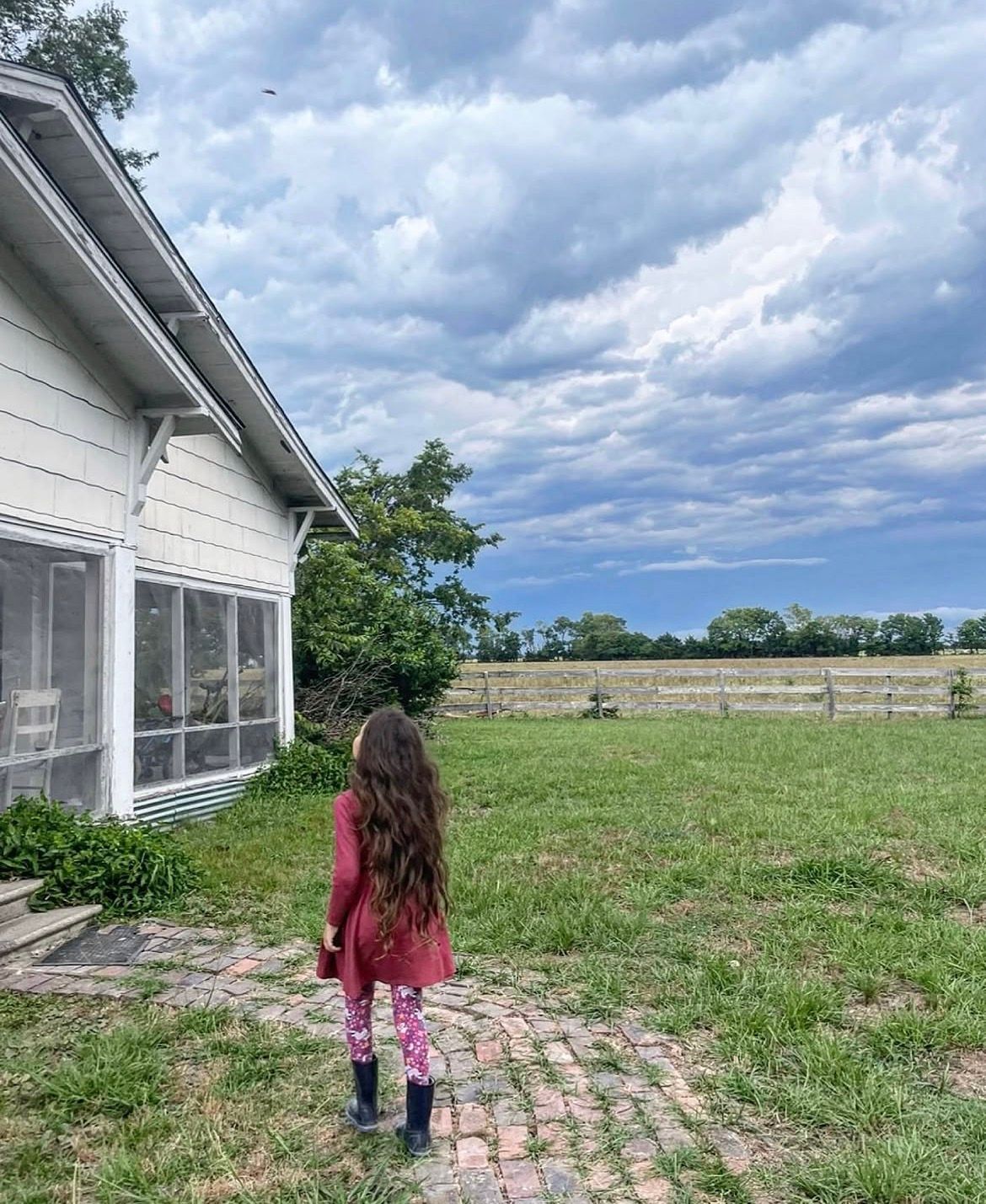
While I worked in the kitchen, I kept an eye out the back door window. She sat in the swing with her head down. Mr. Robot sat a few yards away in his box, and she couldn’t bring herself to look at him. A half hour later, she had hardly moved. I watched and waited. And I prayed, because this felt big, like a story that would continue to live inside her.
Then, I caught sight of a change. While I dried my hands, I moved toward the window to spot the sway of the empty swing. Liesel knelt beside the box with Mr. Robot in her hands, staring into his face—his ruined face.
How do you bring yourself to look at the ruined face of what you’ve made? How do you stare at the misshapen remnants of a dream you built with your hands and formed with your love?
I’d been reading Elisabeth Elliot’s writing about what helps us find courage for difficult moments. She recalls the rainbow’s end that keeps champions charging forward.
“The heroes of the world’s great legends let themselves in for all kinds of fearsome troubles because of the promise of a great reward—the favor of the king, a pot of gold, marriage to a princess. Because there was a shining goal, they entered in with heart and will to participate in the as-yet unseen and unknown hazards of the dreadful journey. Their heroism lay in acceptance—a wholehearted acceptance of conditions other men would avoid at all cost—and in endurance. The dark caves, tunnels, and labyrinths were not problems to be solved but hazards to be traversed, the storms and heavy seas were to be braved, the giants and monsters to be slain. All were accepted and endured in view of the prize.”*
Elliot considers the moments when the hazard we’re given to traverse “is not presented to us in the form of martyrdom, heroic action, dragons or labyrinths…”** But what about the moments when the “dragon” we’re to face is the fear of our own pain when we see the damaged remains of a dream?
From the window, it seemed Liesel’s heart must’ve caught sight of a shining prize, because she reached for another piece. With a little time, she found a way to work with that same clay head and reform Mr. Robot’s face. And though it wasn’t the same as before, his eyes brought her even more delight.
After she finished Mr. Robot, he claimed a special spot on Liesel’s desk at night and would accompany us on trips into town. When we went out to eat, he sat on the table beside her, fiercely protected from Baby Brother.
His presence often sparked questions from passersby, and she proudly showed him off with her biggest smile of all.
One waitress shared how her daughter had also made a creature whom she carried with her everywhere. I wondered what lay beneath the surface of that story. When she asked me to tell her more about Liesel and her robot, I didn’t know how to do more than touch the surface of all Mr. Robot represented.
I only knew that when I saw Liesel beaming there next to him, my heart felt full with the memory of when she slayed a dragon in our backyard.
To watch a child kneel beside a broken dream is a gift. The quiet memory of her courage points me to the One who gave me the joy of life with her. I remember the shining prize of Him. He is the Maker-Friend who can always be trusted to redeem the ruined.
***
Years later, I stepped into my kids’ room and noticed the overflowing box of toys. I rummaged through its contents to see what may have reached its time—a doll better suited for a younger child, a stuffy that saw the washing machine too many times.
At the bottom of the box lay broken pieces of clay. Not sure what I was looking at, I placed them together on the floor. Then I found a plastic cap, painted black and white—an eye.
It belonged with the clay. The remains.
Mr. Robot.
_______
*Elisabeth Elliot, The Path of Loneliness, pp. 107-108.
**Eliot, The Path of Loneliness, pp. 111-112.